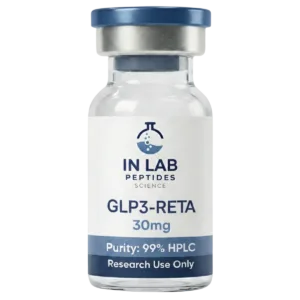
Retatrutide represents the next generation of incretin-based research compounds. Unlike dual-agonists such as Tirzepatide, it targets three key receptors simultaneously: GLP-1, GIP, and Glucagon. This triple-agonist mechanism has been extensively documented in peer-reviewed literature for its interaction with metabolic signaling pathways and receptor cross-talk.

Each receptor in Retatrutide's mechanism has distinct signaling characteristics. GLP-1 receptors modulate incretin signaling and gastric motility. GIP receptors influence insulin secretion pathways and lipid metabolism. The third component — Glucagon receptors — activates thermogenic and lipolytic pathways. Published research indicates that simultaneous activation creates a synergistic effect distinct from mono or dual-agonism.

Retatrutide has become a valuable tool for researchers exploring triple-receptor agonism and metabolic pathway interactions. Because it affects three signaling pathways simultaneously, it enables investigation of receptor cross-talk and synergistic mechanisms that were difficult to study with single or dual-target compounds. The scientific literature continues to expand with new findings.
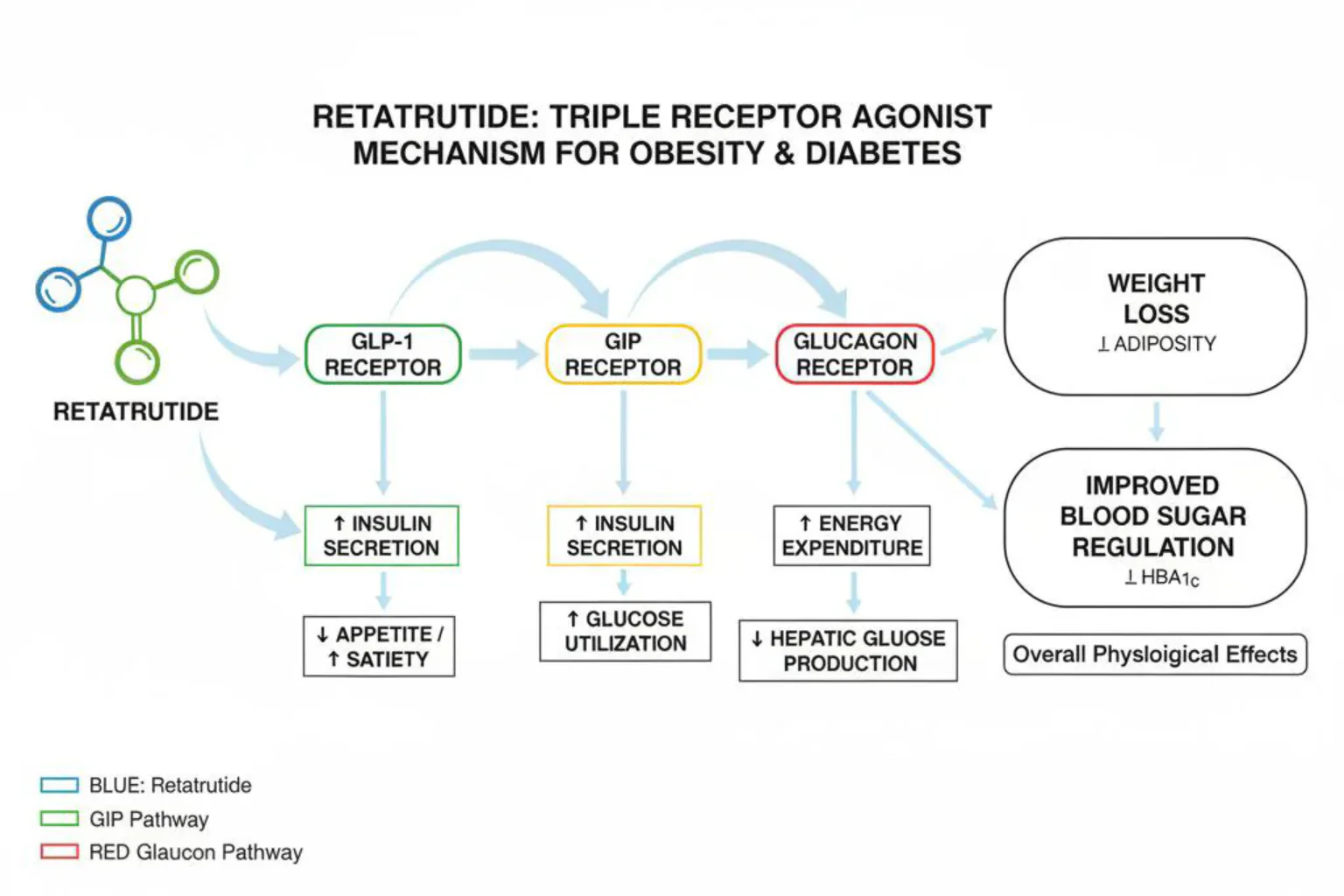
Retatrutide represents the next generation of incretin-based research compounds. While Tirzepatide activates two receptors (GLP-1 and GIP), Retatrutide adds a third: the Glucagon receptor. This structural addition enables the study of triple-receptor agonism and opens new possibilities for investigating metabolic pathway interactions.
Each receptor contributes distinct signaling characteristics: GLP-1 receptor activation modulates incretin signaling cascades and gastric motility pathways. GIP receptor engagement influences insulin secretion mechanisms and lipid metabolism interactions. Glucagon receptor activation stimulates thermogenic and lipolytic signaling pathways. Most incretin-based compounds target only the first two — the addition of glucagon receptor agonism distinguishes this compound in research settings.
Published research indicates that when these three pathways are activated simultaneously, they create what scientists describe as a synergistic effect. The combined receptor activation produces measurable outcomes distinct from single or dual-receptor activation alone. This represents a unique pharmacological profile for studying receptor cross-talk.
The compound demonstrates extended stability with a prolonged half-life, making it suitable for weekly intervals in research protocols. For scientists investigating incretin biology, glucagon receptor pharmacology, or multi-agonist mechanisms, retatrutide offers a unique research tool for exploring how these interconnected signaling systems function together.
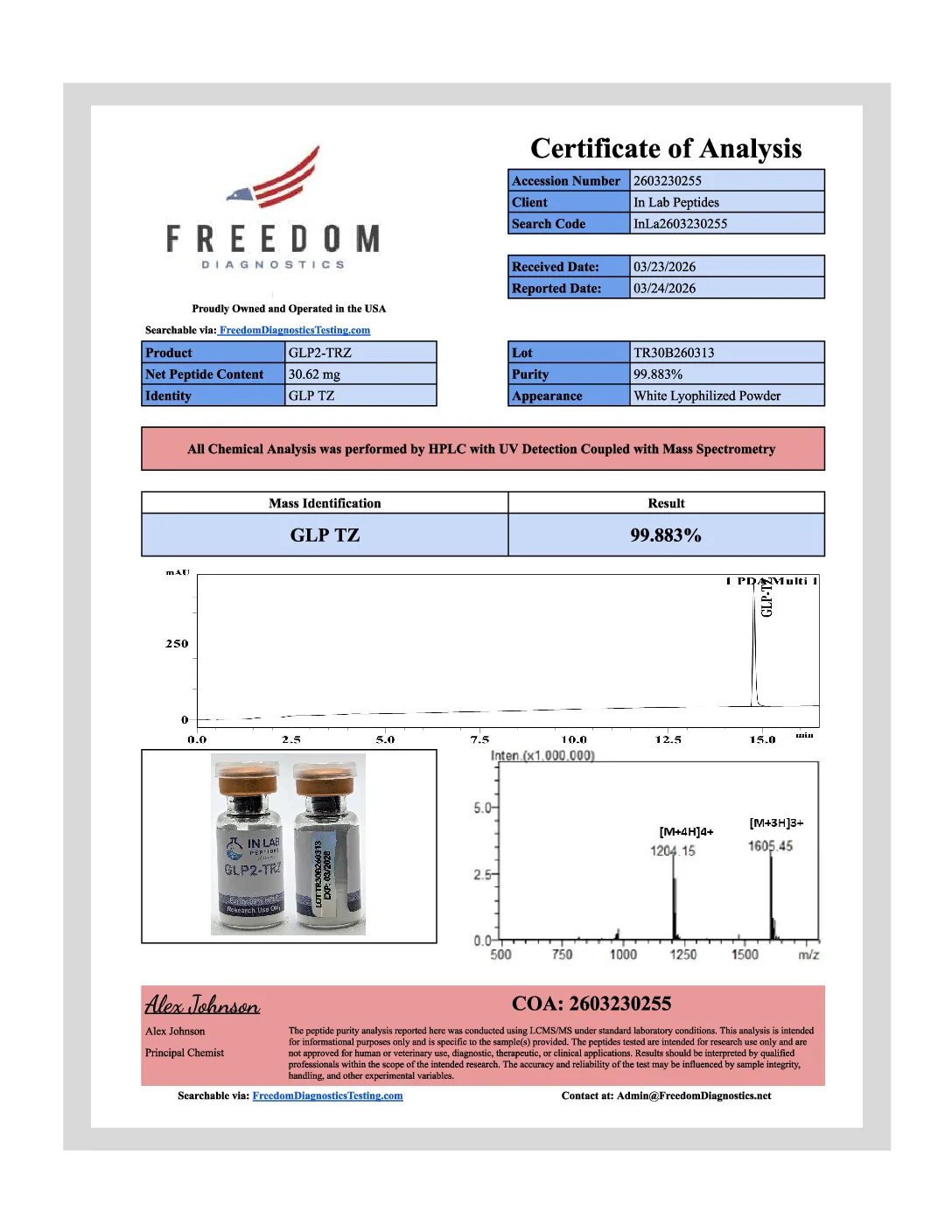
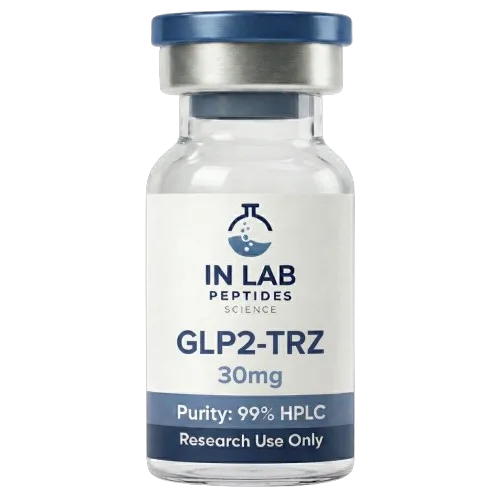
GLP-2 TRZ is a synthetic dual-agonist research compound studied for its interaction with incretin-related signaling pathways. It has been widely explored in laboratory and preclinical settings for its activity at both GLP-1 and GIP receptors. Scientific literature has examined this dual-receptor mechanism for its role in coordinated signaling and receptor cross-talk within controlled research environments.
GLP-2 TRZ engages two key incretin-related receptors, each contributing to distinct signaling pathways. GLP-1 receptors are associated with incretin signaling and gastrointestinal regulatory processes, while GIP receptors are studied for their role in metabolic signaling and lipid-related pathways. Research indicates that simultaneous activation may produce coordinated signaling effects distinct from single-receptor interaction.

GLP-2 TRZ is utilized in laboratory research focused on dual-receptor agonism and incretin pathway interaction. Its ability to engage multiple signaling systems makes it useful for studying receptor coordination, pathway overlap, and biochemical signaling dynamics. Ongoing research continues to explore its applications across various experimental models.
 Best Sellers
 Best Sellers
 Best Sellers
 Best Sellers
 Best Sellers

This website offers products strictly for Laboratory Research Use Only. Not for human consumption, medical, or veterinary use.